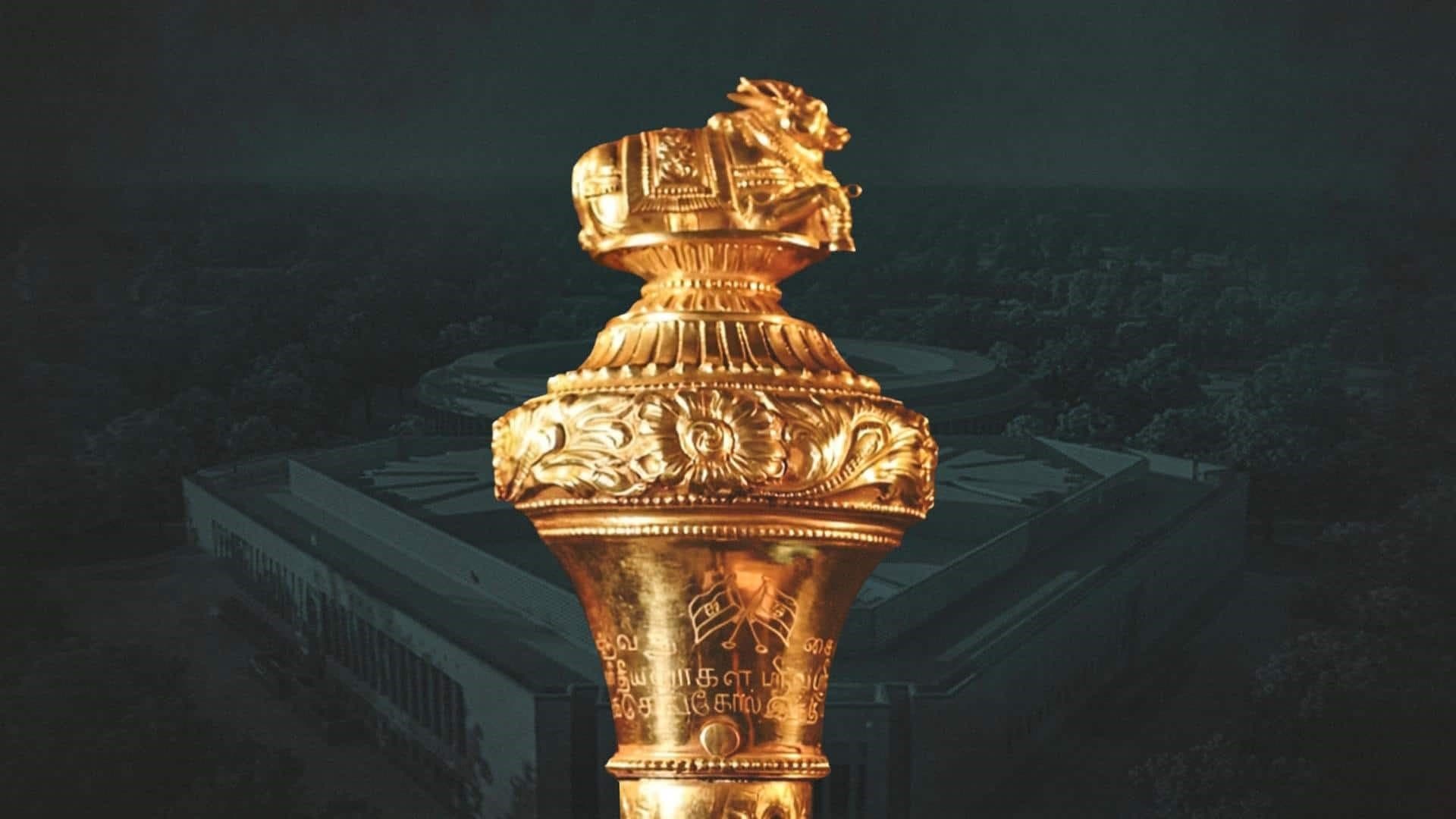
The Sacred Legacy of the Sengol
The Sengol is an ancient ceremonial sceptre deeply rooted in the traditions of Tamil culture and Indian civilization. Historically, it symbolized righteous governance — the transfer of power guided by dharma (justice and moral order). Crafted with exquisite artistry, the Sengol stands as a timeless representation of authority aligned with ethics.
In modern times, the Sengol regained national prominence when it was ceremonially installed in India's new Parliament building, reaffirming its enduring significance in the country's cultural and political heritage.
Craftsmanship and Cultural Significance
The Sengol installed in Parliament was meticulously handcrafted by master artisans of Vummidi Bangaru Jewellers (VBJ), Chennai — a heritage jewellery house with over a century of legacy in traditional gold craftsmanship.
- Made in high-purity gold and silver
- Traditional Tamil design motifs
- Intricate hand engraving and repoussé work
- Sacred Nandi (bull) finial symbolizing justice and vigilance
- Temple-inspired ornamental structure
The creation involved scholars, historians, and sthapathis (temple architects) to ensure historical authenticity.
Symbolism of the Nandi
At the top of the Sengol sits Nandi, the sacred bull associated with Lord Shiva. Nandi faces forward, signifying justice delivered without bias, moral vigilance, duty toward righteous governance, and truth as the guiding principle. This symbolism reflects the ancient Tamil concept that rulers govern under divine moral authority.
The Sengol in Modern India
The Sengol bridges India's civilizational past with its democratic present. Its installation in the Parliament underscores continuity of cultural heritage, respect for traditional knowledge systems, recognition of Tamil civilizational contributions, and governance guided by ethical principles. It stands not merely as an artefact, but as a reminder that power must serve dharma.
Conclusion
The Sengol embodies India's timeless message: leadership must rest on righteousness. From ancient Tamil coronation rituals to modern Parliament, it continues to inspire the ideal that authority should be exercised with wisdom, justice, and humility.